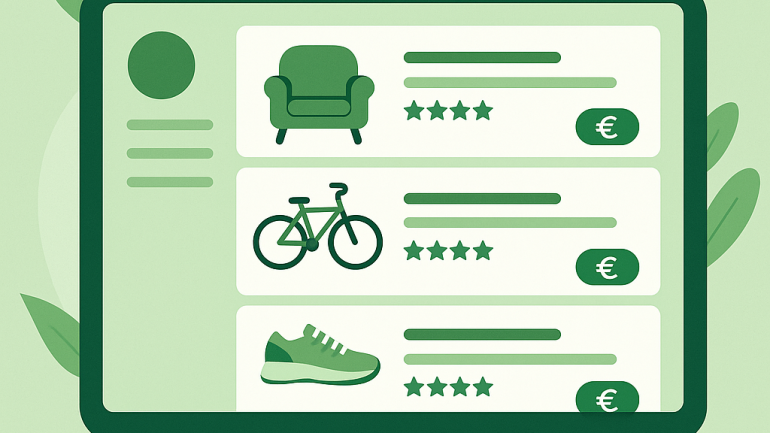
Google’s Universal Commerce Protocol (UCP) and OpenAI’s Agentic Commerce Protocol (ACP) are two open standards that let an AI assistant talk to a store’s checkout, and for most stores the right move is to prepare product data and let the platform or payment provider handle the protocol. Building either one yourself only makes sense if you run a custom stack with engineering capacity.
Both standards depend on catalog data being accurate, so the work that matters now is the same for both. This post explains what each protocol does, how they differ in practice, and what a store owner should ask a platform or developer. For the wider picture, start with agentic commerce explained.
What is OpenAI’s Agentic Commerce Protocol?
ACP defines how ChatGPT passes an order and payment details to a merchant, who remains the seller. OpenAI released it with Stripe in September 2025, when it launched Instant Checkout in ChatGPT for US shoppers, starting with Etsy sellers.
According to OpenAI’s developer documentation, the roles are split three ways. ChatGPT is the agent: it collects the buyer’s details and payment choice and shows the checkout screen. The merchant validates the order, sets fulfillment and tax, charges the payment and keeps its own payment processor. The payment provider turns a delegated payment request into a token, and Stripe’s Shared Payment Token was the first compatible implementation. OpenAI states that it is not the merchant of record.
The same documentation describes a product feed, sent as CSV or JSON and refreshed regularly, with identifiers, descriptions, pricing, inventory, media and fulfillment options. Integration starts with a sample feed for validation, followed by daily snapshots. As of October 2026, the documentation says building with ACP is open to everyone, while Instant Checkout in ChatGPT is limited to approved partners.
Adoption was slower than announced, and in early 2026 OpenAI was reported to be moving Instant Checkout into apps. The protocol exists, but the in-chat checkout around it is being reshaped.
What is Google’s Universal Commerce Protocol?
UCP is an open standard announced by Google and Shopify in January 2026 for agents to work with a store across the shopping journey: product queries, cart operations and checkout. It launched with retailers and platforms such as Shopify, Walmart, Target and Etsy, with payment companies among its endorsers. Google has presented it as complementary to its merchant feeds, not a replacement.
The part a merchant can see most clearly is the profile. According to Google’s Merchant developer documentation, a business that implements UCP hosts a JSON file at /.well-known/ucp on its own server. It must be publicly accessible without authentication. The file declares which capabilities the server supports (such as checkout, fulfillment, discounts and order management), the specification versions in use, the endpoints where Google should send requests, how payment is handled (for example Google Pay) and the public keys used to verify messages.
In plain terms, UCP asks a store to publish a machine-readable description of what an agent may do with it. That is a technical task for your platform or developer, and not something to handle in a spreadsheet.
How do ACP and UCP compare for a merchant?
They differ in origin, in who is on the other end, and in what you must expose, but both need the same underlying catalog. This table keeps to what is documented.
| Criterion | ACP | UCP |
|---|---|---|
| Led by | OpenAI and Stripe | Google and Shopify |
| Announced | September 2025 | January 2026 |
| Where the shopper meets it | ChatGPT | Google’s shopping and assistant surfaces |
| What the merchant publishes | A product feed and checkout endpoints | A UCP profile at /.well-known/ucp, plus the Merchant Center product data |
| Who is seller of record | The merchant | Check the current Google documentation for your setup |
| Relation to feeds | Works alongside a product feed | Complements Merchant Center feeds |
| Typical route for a small store | Through the platform or payment provider | Through Shopify or another participating platform |
The row on seller of record is deliberate. We have not confirmed it for every platform setup, and we would rather leave it open than state a rule that may not hold for you. Ask your platform before you assume.
Do these protocols replace your product feed?
No. A protocol lets an agent ask about products and start a purchase, but the agent still needs accurate product data to know what to ask for. Google positions UCP next to Merchant Center feeds, and OpenAI’s ACP documentation describes a product feed as part of the integration.
That has a practical consequence. If your price is wrong in the feed, a perfect checkout integration will just complete the wrong order faster. This is why we put catalog quality ahead of protocol work, as laid out in one product feed for every AI channel and the product data AI shopping agents read.
What should a store do about UCP and ACP, in order?
Fix the catalog, find out what your platform already supports, then decide whether any custom work is justified. Here is the sequence we use.
- Audit the catalog. Valid GTINs, consistent brand, complete attributes, and price and stock that match the product page.
- Check Google Merchant Center diagnostics and clear item-level issues, since UCP sits next to that data.
- Ask your platform vendor whether it supports UCP, ACP or both, what you must turn on, and what it costs.
- Ask your payment provider whether it supports the payment flow each protocol expects.
- Check who owns the customer relationship in each flow: the order record, the email address, returns and refunds.
- Decide on custom work only if the first four steps leave a gap and the expected volume justifies engineering time.
- Set up measurement so visits and orders coming from AI assistants can be separated from other traffic.
What does this look like for a hypothetical store?
Imagine a store with a few thousand SKUs on a hosted platform, selling a mix of its own brand and resold brands. The owner asks whether to build a UCP integration. We would start somewhere else: a good part of the catalog, in this example, has no GTIN and thin titles, and stock updates once a day.
Fixing those fields gives the platform’s own integration something worth publishing. Only then does the owner ask the platform which protocols it supports and whether turning them on changes payments or order handling. The custom build never comes up, because the platform route is enough. The numbers here are purely illustrative, and your own audit will show different gaps.
What mistakes do stores make with agentic commerce protocols?
| Mistake | Symptom | Better move |
|---|---|---|
| Building an integration before fixing the feed | Disapproved items and mismatched prices persist after launch | Audit identifiers, attributes and price first |
| Treating the two protocols as a choice | A project stalls while teams argue which to adopt | They are not exclusive; most stores reach them through a platform |
| Assuming eligibility | The feature is announced but you cannot find a setting for it | Confirm with your platform whether you qualify; some programs are limited to approved partners |
| Ignoring the customer relationship | Orders arrive but you cannot see the customer in your own systems | Check data ownership before you switch it on |
| Planning around a program that is changing | Budget tied to in-chat checkout that was later reshaped | Treat checkout as optional and keep the site the primary place to buy |
When can you safely ignore both protocols for now?
If most of your sales come from search, a marketplace or repeat customers, and your platform does not offer either protocol, you can wait. The catalog work is still worth doing because it also feeds Google, Microsoft and the marketplaces. The protocol work is the part that can wait.
Also be wary of vendors who sell protocol integration as urgent. Many shoppers still research with AI and finish the purchase on the store’s website, which we discuss in Discover in AI, buy on your site.
What should you ask your platform or developer?
- Do you support UCP, ACP or both, and is it available to my plan today?
- What do I need to publish or enable, and who maintains it?
- Who is the seller of record, and where do orders and customer data land?
- How do price and stock changes reach the agent, and how fast?
- How do returns and refunds work for an order placed through an assistant?
- What happens if the program changes or ends?
How Avafa works
We prepare the data layer these protocols depend on. Our Google Merchant Center agency service audits the catalog, fixes the feed at its source and keeps it updating. For AI channels beyond Google, see our ChatGPT Shopping agency page. We are a consultancy based in Spain working remotely, and we do not promise placement in any AI answer.
To see how the assistants differ, read ChatGPT vs Gemini vs Copilot, and use the readiness checklist to plan the order of work.
FAQs
Do I have to choose between UCP and ACP?
No. They are not exclusive, and most stores will reach them through their platform or payment provider rather than build either one.
Does UCP replace Google Merchant Center?
No. Google has presented it as complementary to merchant feeds, so you keep Merchant Center and its product data.
Who is the merchant of record in ACP?
The merchant. OpenAI’s developer documentation states that OpenAI is not the merchant of record, and merchants use their own payment provider.
Where does the UCP profile live?
According to Google’s Merchant developer documentation, it is a JSON file hosted at /.well-known/ucp on the merchant’s server, publicly accessible without authentication.
Can any store turn on Instant Checkout in ChatGPT?
As of October 2026, OpenAI’s documentation says Instant Checkout is limited to approved partners, even though building with ACP is open to all. Check the current terms before you plan around it.
What is the most useful thing to do this quarter?
Clean the product data: identifiers, attributes, price and stock. It serves both protocols and every other channel.